
Veterinarian signing bonuses: what they actually buy, and what they don't
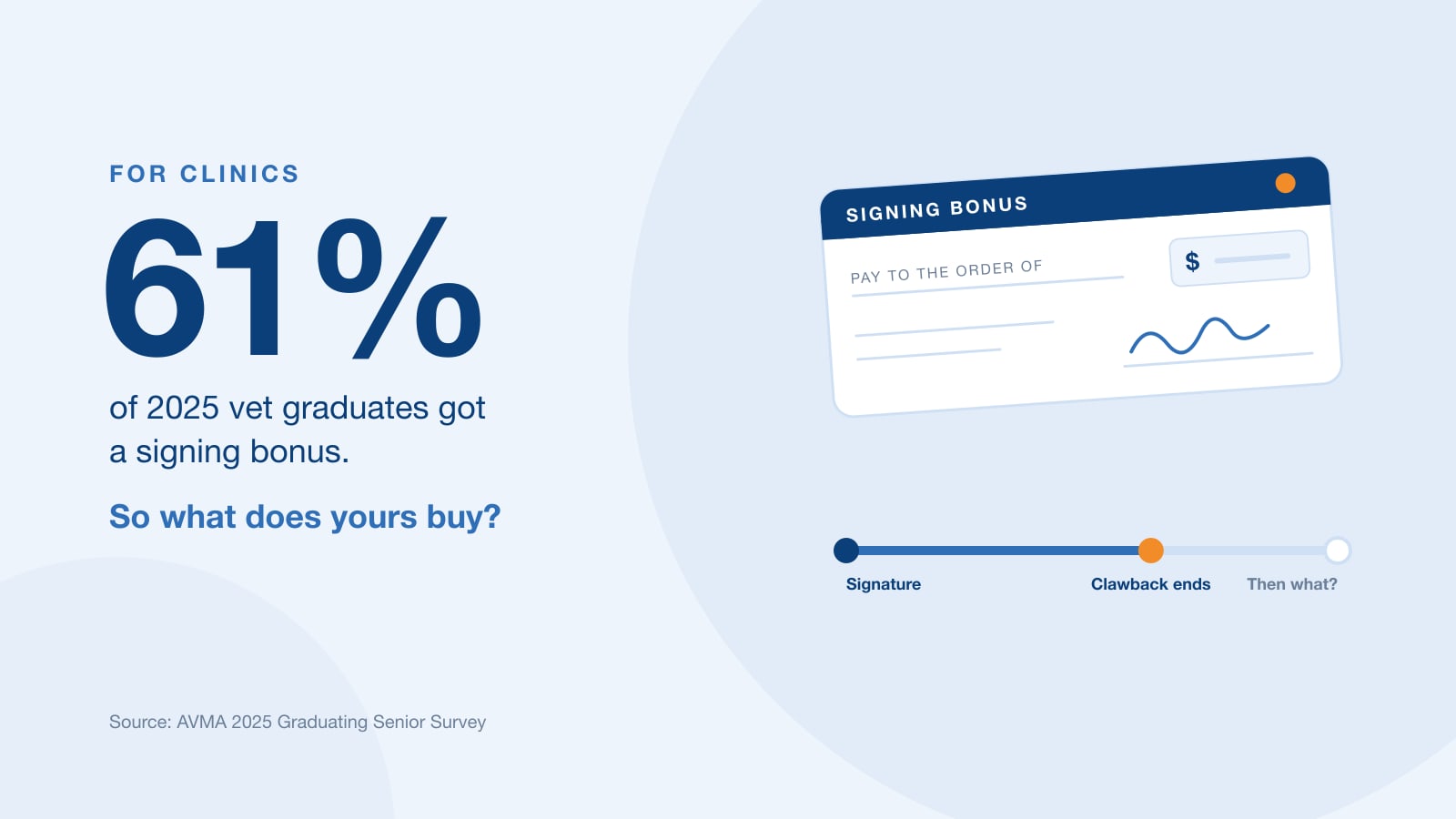
The short answer: a signing bonus buys a signature on a date. It does not buy fit, it does not buy a longer stay once the repayment clock runs out, and in 2026 it rarely buys you a candidate that other clinics were not also courting. According to the AVMA's 2025 Graduating Senior Survey, 61% of new veterinary graduates reported a signing bonus as part of their compensation. When most offers carry one, the bonus stops being a reason to choose you and becomes the price of being considered.
A signing bonus is now table stakes
The same AVMA survey shows what else sits in those packages: 37% of graduates reported a moving allowance, 15% student loan repayment, 10% emergency case compensation and 3% a housing allowance. Graduates entering companion animal practice reported an average starting salary of $140,000. Against that backdrop, a bonus is expected. Leaving it out can cost you the conversation. Adding it rarely wins the decision on its own.
The market is also shifting under the bonus. The AVMA found that nearly 60% of 2025 seniors had full-time employment lined up before graduation, a share that has fallen every year since 2022, while almost 7% had received no offers. The bidding war for new graduates is cooling. A clinic that keeps raising its bonus because it did last year may be paying for leverage that candidates no longer have.
What a signing bonus actually buys
It buys speed. When a doctor is choosing between two similar offers, cash up front can close the decision this week instead of next month, and every week a seat sits empty costs production. Our breakdown of the cost of an empty DVM seat puts numbers on that.
It buys a commitment period, if you attach one. Most bonuses come with repayment terms: leave before a set date and some or all of the money comes back. That clause is the only part of a signing bonus that works as retention, and it works only until the date passes.
It can close a real cash gap. Relocation costs, the stretch between a last paycheck and a first one, a doctor carrying heavy student debt who needs cash now more than a slightly higher salary later. When the bonus solves a specific problem for a specific doctor, it earns its cost.
What a signing bonus does not buy
It does not buy a longer stay. The day the repayment obligation expires, the bonus stops doing anything. If the reasons doctors leave are still in place, workload, scheduling, management, mentorship, the doctor leaves on schedule. Our breakdown of why associate veterinarians leave covers what actually drives departures, and a larger check up front is not one of the fixes.
It does not buy a bigger pool. A bonus competes for the same domestic candidates every other clinic in your market is calling. Raising it moves you up the list for the same few doctors. It does not create new ones.
It does not buy fit. A doctor who chose you for the check chose you for the check. That is a thin foundation for a multi-year relationship with your team and your clients.
The repayment clause is getting harder to lean on
If your retention plan is the clawback, check it against current law. California's Assembly Bill 692, which applies to agreements entered into on or after January 1, 2026, sharply restricts so-called stay-or-pay terms that require employees to repay money when they leave, including how signing bonus repayment can be structured. California practices should confirm any bonus repayment terms comply before relying on them, and practices everywhere should treat a clawback as a backstop, not a retention strategy.
Where the same dollars do more
Put the money where the reason to stay is. Student loan repayment, which only 15% of 2025 graduates reported being offered, is paid over time and is worth more each year the doctor stays. It sets your offer apart, and it rewards tenure instead of the signature.
Split the bonus. Paying part at signing and the rest at later anniversaries turns a one-time transaction into a reason to stay, and it avoids the awkward moment of asking a departing doctor to write a check back.
Fund what fixes the reasons doctors leave: protected mentorship time for a new graduate, a schedule with predictable days off, real CE support. These cost money too, and they keep working long after a bonus has been spent.
Widen the pool. The bonus arms race exists because every clinic is bidding for the same limited domestic supply. Veterinarians from AVMA-accredited programs in Canada and Mexico sit the same NAVLE as US graduates and qualify under the USMCA TN category. A doctor who relocated across a border for your practice chose the job itself. Our guides to hiring Canadian veterinarians and hiring an international veterinarian lay out both routes.
When a signing bonus is the right call
Use one when you have found the right doctor and the only thing between you and a yes is timing or a cash gap, like relocation. Size it to that gap, make sure the terms hold up where you practice, and pair it with something that pays off over years, not weeks. Do not use it as a substitute for fixing the job.
What VetBridge USA handles
VetBridge USA sources veterinarians from Canada and Mexico for independent US practices, matches them to your opening, and coordinates state licensing and the TN process end to end, so your team is not learning immigration paperwork on the job. You interview and you decide who you hire.
Sources
Signing bonus, moving allowance, student loan repayment, starting salary and employment figures come from the AVMA 2025 Graduating Senior Survey, as reported by AVMA News on October 15, 2025 (Inflation continues to dampen gains in veterinarian salaries, fewer new grads entering full-time employment). The California rules come from California Assembly Bill 692, effective January 1, 2026. School accreditation comes from the AVMA Council on Education, and the NAVLE is administered by the International Council for Veterinary Assessment. TN eligibility for veterinarians comes from USCIS, TN USMCA Professionals.
Questions clinics ask
How common are signing bonuses for veterinarians?
Very common. In the AVMA's 2025 Graduating Senior Survey, 61% of new veterinary graduates reported a signing bonus as part of their compensation, alongside moving allowances (37%) and student loan repayment (15%). For most offers, a bonus is now expected rather than a differentiator.
Do veterinarians have to pay back a signing bonus if they leave early?
Only if the agreement says so, and only as far as state law allows. Many bonuses carry repayment terms tied to a service period. California's AB 692 sharply restricts those terms for agreements made on or after January 1, 2026, so the clause is a weaker retention tool than many practices assume.
Is a signing bonus or student loan repayment better for retaining a veterinarian?
For retention, loan repayment usually wins. It is paid over time, so it is worth more the longer the doctor stays, and only 15% of 2025 graduates reported being offered it. A signing bonus pays out once and stops working when the repayment period ends.
How much should a clinic offer as a veterinarian signing bonus?
Size it to the specific gap it has to close, such as relocation or timing, rather than to what competitors advertise. A bigger bonus competes harder for the same domestic candidates without creating new ones. Widening the pool to Canadian and Mexican veterinarians changes the math more than a larger check.